

Choosing a Portable Electric Mobility Scooter
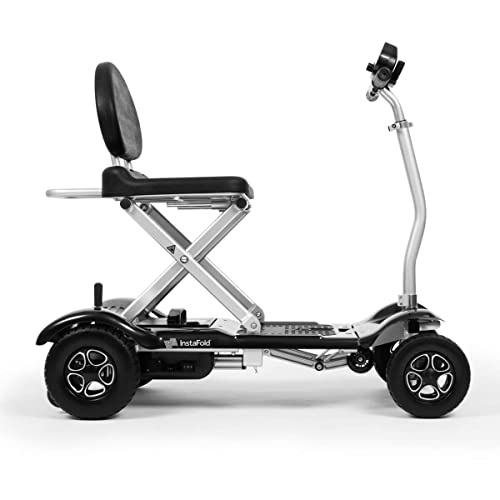
A mobility scooter that is portable is a great choice for those who frequently travel or are in need of transportation to the city. The small and lightweight design makes it easy to carry and store.
Many scooters fold up or are able to be broken down into smaller pieces that can easily fit in a car trunk. This is a lot more convenient than a larger non-folding mobility scooter.
Here are a few examples of
There are a variety of scooters available, from compact models that fit inside your trunk to sturdy outdoor models. When you are choosing a mobility scooter with a portable battery be sure to consider the size of the turning circle (how much space it will need to maneuver) as well as its speed settings as well as the battery strength indicator. adjustable comfort-designed seats and steering column with horn and cane holder accessories and front disk brakes that provide powerful stopping power when you go down steep slopes.
The front wheels of mobility scooters can be turned right and left by using tillers. These tillers have T-shaped columns. Some tillers come with wraparound handles that are more flexible for those with limited dexterity and strength. In addition to turning mobility scooters, some models have controls for reverse and forward speed, turning, and speed signals. These can be located on the tiller or on a separate control panel.
Some scooters feature the captain's seat, which is shaped to accommodate people of different sizes. Captain's chairs have more cushioning and curved rearrests. The seat should be able to swivel to allow you to get on and off easier. It should also be able to lower and raise, so that your knees are at an angle of 90 degrees. Consider whether a suspension could make the ride more comfortable on bumps, rough surfaces and hills.
If you intend to use your scooter mostly indoors, you should look into a three-wheeled scooter. They have a smaller turning radius and are easier to maneuver through tight spaces than four-wheeled models. On the other hand, if intend to use your scooter mostly outdoors, opt for an all-wheel model because it's more stable when travelling on ramps or hills and can cover a large distance on a single charge.
Portability
Portable electric mobility is a great travel option. It's easy to fold up and fits into a car boot or the back of a cab. It is also easy to transport on planes because it has smaller batteries. Additionally, it usually has a swivel seat and flip-up armrests that make it easy to access.
These features make scooters more accessible for those who want to regain independence and not rely on others to get around. They also let you ride in tight spaces, either indoors or outdoors. This helps you navigate through crowds, such as shopping malls or busy pedestrian zones.
These models are also simple to operate, even for those who have never operated an electric scooter before. Many models come with cruise control and two driving modes. The brakes are automatic for safety. Additionally they are extremely light and easy to maneuver them in small spaces.
Depending on the model of scooter, it could have distinct features or add-ons. Some scooters come with a basket to store personal belongings. Some also have a cup holder that is designed to accommodate most wheelchair-compatible cups. The tiller, or steering column, can be adjustable, which can be beneficial for taller people who require it to avoid hitting their knees while seated.
Some scooters have battery indicators to let the user know when their battery is depleted. livewell scooters is crucial as it prevents users from being far from a charging station when their batteries run out. This feature is not present in every mobility scooter, so it is important to confirm this before purchasing.
Request that your retailer bring a variety of scooters at your home if you are unsure. This lets you test out various models and determine what is most suitable for your requirements. Some companies will also provide the opportunity to demonstrate their products at home, which is helpful to those who are unfamiliar with the product and have no idea how to operate it.
Safety
Scooters are a great way to get around, but there are some safety issues that must be taken into consideration. A scooter could be dangerous when it is used on a rough terrain or going too fast. Protective gear is essential, as well as being aware of the other people around you.
Mobility scooters are a form of assistive technology which helps people with mobility issues become more independent. They are a single occupant electric vehicle that can be used on the road or pavement according to the model. They have three to five wheels, and are steered by the handlebar. A range of accessories and features can be added to improve efficiency and increase safety for the user.
The most frequently-cited risk with mobility scooters is injuries from accidents. Accidents can be caused due to operator error or external factors, like poor road conditions. Accidents could result in accidents, tipping over or falling off the scooter. It is essential to adhere to simple safety tips such as wearing an appropriate helmet or reflective clothing while riding. Maintaining your scooter is important, as well as not operating it in poor weather.
It is also crucial to test a scooter before purchasing it. You can then test the scooter's comfort as well as its ability to move. It is recommended to service your scooter every year to ensure all components are working properly.
While there is much research around the positive impacts of mobility scooters on people's health and well-being, there is little that focuses on safe operation and use of scooters. Most studies that study scooter use concentrate on the effects of frequency and length of use rather than on physical health, and with the exception of two studies (Barton and co. 2014; May et al. (2010)) any research that does exist on mobility scooters is inseparable from studies on electronic wheelchairs. These are all factors that limit mobility and mean that we do not have a clear understanding of the impact of mobility scooters for people's ability to move independently and safely in public areas.
Controls
When shopping for a mobility scooter with a portable battery, it is crucial to know what to look for in terms of controls. In general, all scooters have a tiller which has forward and reverse directions, speed controls and other options like a display and mode switch. These are usually located centrally on the tiller. Some are equipped with thumb paddles or levers to control the throttle and speed. Others use a joystick or loop handle.
There are two kinds of tires that are used in electric scooters: pneumatic (air-filled) or solid/sealed. Pneumatic tires tend to be faster but require more maintenance than solid/sealed. The choice of tire will depend on a variety of factors, including the rider’s weight, the terrain and the weather conditions, as well as whether the scooter is intended for use on public roads.
Most scooters have an accelerator lever located close to the tiller. Another lever is usually on the opposite side that is used as a break-in the event in the event of an emergency. It is essential to learn to ride the scooter and practice using the brakes, throttle and speed prior to going out on your own.
A lot of scooters will have seats and a headrest that swivels. Some scooters have a padded seat and backrest as well, while others are designed for outdoor use with an extra-large seat that can be adjusted in height. It is crucial to select a seat in which you feel comfortable and that is sturdy.
A battery indicator is also beneficial to let the user know when the scooter is switched on or off. The scooters don't usually emit a sound when they are turned on, so having a battery indicator is extremely helpful.
Most scooters run on a single 12-volt lithium-ion battery that recharges using a standard wall socket. They usually last between 18 months depending on how frequently they are used. Some scooters have spare batteries.